
What are regulating services? Examples like climate regulation, flood control, and pollination, how they differ from supporting services, and their value.
National Councils for Sustainable Development
Pros and Cons of Geothermal Energy: A Clear Guide
Provisioning Services: Definition and Examples in Ecosystems
Learn what provisioning services are, from food and fresh water to timber and medicines, and why their supply depends on healthy ecosystems.
Greenwashing Examples: Famous Cases and Warning Signs
Explore documented greenwashing examples, the seven sins behind misleading claims, and practical ways to spot weak sustainability marketing.
Biomagnification: Definition, Examples and Why It Matters
Learn how biomagnification concentrates pollutants up food chains, with clear DDT and mercury examples, health effects, and common myths.
The Tragedy of the Commons: Meaning, Examples and Solutions
What is the tragedy of the commons? Hardin’s idea, real examples from cod to CO2, Elinor Ostrom’s 8 design principles, and solutions that work.
What Is Ecotourism? Principles, Examples, Greenwashing
What is ecotourism? Learn its 8 core principles, real examples from Costa Rica to Palau, its downsides, and how to spot greenwashing before you book.
Solarpunk: The Hopeful Vision of a Sustainable Future
What is solarpunk? Origins, core ideas, architecture, solarpunk vs. cyberpunk, real-world projects, criticisms, and how you can help build it.
The Phosphorus Cycle: Steps, Human Impact and Why It Matters
Learn how the phosphorus cycle moves through rocks, soil, water, and life—and how fertilizer runoff can disrupt ecosystems.
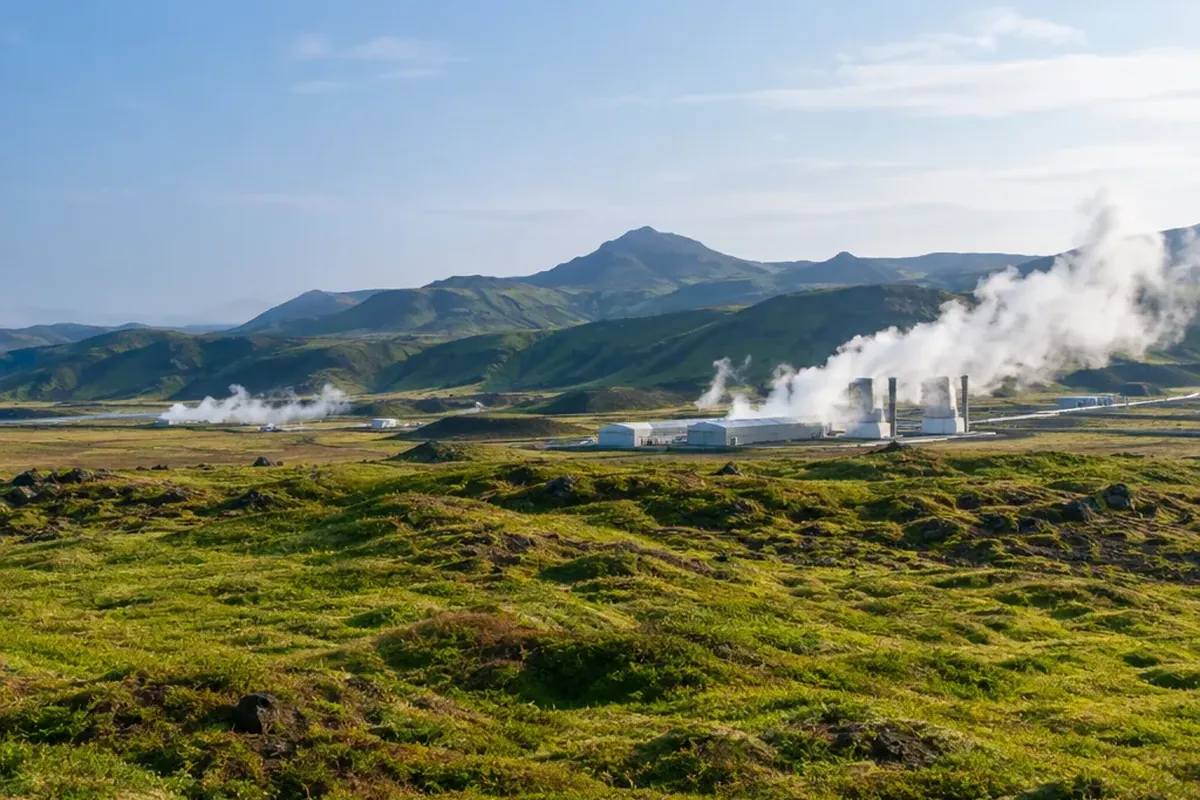
Geothermal energy can deliver steady, low-emissions electricity or efficient building heating and cooling, but it requires suitable underground conditions and substantial upfront investment. A geothermal power plant taps deep heat, while a residential geothermal system moves heat between a building and the shallow ground.
How geothermal power and home systems use heat from the Earth
At utility scale, plants draw on underground steam or hot water, typically 300–700°F, to turn a turbine and generate electricity. In a dry-steam plant, steam goes directly from the reservoir to the turbine. In a flash-steam plant, high-pressure hot water is flashed to steam in a tank. In a binary-cycle plant, geothermal heat transfers to a secondary working fluid in a closed loop while the underground water returns to the ground.
A geothermal heat pump uses shallow ground temperatures, which remain constant year-round below the frost line, to heat and cool buildings. Connected to a buried ground loop, it operates at three to five times the efficiency of conventional heat pumps.
The advantages that make geothermal a dependable energy source
Geothermal plants provide firm baseload power 24/7, regardless of weather, time of day, or season, without requiring battery storage. They achieve capacity factors of 85–95% and can ramp output within seconds to provide grid services such as frequency regulation.
Lifecycle emissions are about 38 grams of CO2 equivalent per kilowatt-hour for binary plants and 47 grams for flash plants, compared with roughly 980 grams for coal. Per gigawatt of output, the land footprint is roughly 1–3 square kilometers, compared with 20–75 square kilometers for solar and 30–75 for wind. Geothermal heat can also supply district heating, greenhouses, aquaculture, industrial drying, and lithium recovery from brines.
Five cons of geothermal energy to weigh before building
- Useful heat is not equally accessible. Conventional geothermal power plants are geographically restricted to tectonic plate boundaries, volcanic hotspots, or areas with high heat flow near the surface. Away from those settings, a plant is technically possible but requires deep drilling, often beyond 4 kilometers, which makes it highly impractical.
- Drilling puts money at risk before power is produced. Installation of a conventional hydrothermal plant costs about $4,000–$6,000 or more per kilowatt, with most expense in exploration and drilling. A reservoir may turn out to be too cool, too small, insufficiently permeable, or a dry hole.
- A reservoir needs active stewardship. Without active management, cooling or pressure loss reduces output. Decline rates at geothermal fields can reach 2.7–5% per year; at some wells at California’s The Geysers, flow fell 50% after about eight years. Operators reinject cooled water to sustain pressure and temperature.
- Fluids and gas require controls. Some geothermal fluids contain dissolved hydrogen sulfide, which smells like rotten eggs and is toxic at higher concentrations. Vented steam can carry carbon dioxide, ammonia, methane, and dissolved solids including heavy metals.
- Enhanced geothermal can create seismic risk. Injecting fluids at high pressure can trigger induced seismicity. Most events are too small for people to feel, but a few have caused damage.
| System | What it delivers | Major upfront constraint |
|---|---|---|
| Geothermal power plant | Grid electricity | Exploration, deep drilling, and a viable underground resource |
| Residential geothermal heat pump | Heating and cooling for one building | $15,000–$40,000+ installation and a site suitable for ground loops |
Environmental impacts are lower than fossil fuel, not zero
Binary-cycle geothermal plants produce zero air emissions during operation because geothermal water never touches the turbine and is returned to the ground in a closed system. Flash and dry-steam designs emit small quantities of dissolved gases. Geothermal brines can contain dissolved contaminants such as arsenic, mercury, boron, antimony, and salt, which require reinjection or treatment.
Water consumption can range from 1,700 to 4,000 gallons per megawatt-hour, though closed-loop and dry-cooling designs can reduce water use by over 90%. Emissions of sulfur dioxide and carbon dioxide from geothermal plants are about 97% lower than those of fossil fuel-fired power plants.
Can geothermal energy cause earthquakes?
Induced seismicity is a known risk for enhanced geothermal systems (EGS). Rather than relying on a naturally permeable reservoir, EGS drills deep into hot, impermeable rock and injects water under pressure to create or reopen fractures. A production well intersects the fracture network, and circulating water brings heat to the surface to generate electricity.
In 2006, the Basel Deep Heat Mining project in Switzerland was permanently terminated after a magnitude 3.4 earthquake. On November 15, 2017, the Pohang EGS project in South Korea triggered a magnitude 5.5 earthquake that caused one fatality, 135 injuries, and direct damage later revised to $300 million. An international expert commission confirmed that hydraulic stimulation activated a previously unmapped, critically stressed fault. Modern EGS projects use traffic-light systems with predetermined thresholds to pause or reduce injection if seismicity exceeds set limits.
Enhanced geothermal could make more places viable
Adapting oilfield drilling strategies has shortened EGS drilling times by 50–70%. In Utah, Fervo Energy’s Cape Station has delivered first power, with a 33-megawatt first block declared commercially operational. The project has a total capacity potential of about 8.4 gigawatts, with 500 megawatts under construction.
How geothermal compares with solar and wind
| Measure | Geothermal | Solar PV | Onshore wind |
|---|---|---|---|
| Typical capacity factor | 85–95% | About 16–17% | About 34% |
| Average installed cost (IRENA, 2024) | $4,015 per kW | $691 per kW | $1,041 per kW |
| Global average cost of electricity (IRENA, 2024) | $0.060 per kWh | $0.043 per kWh | $0.034 per kWh |
| Land per gigawatt | 1–3 km² | 20–75 km² | 30–75 km² |
| Output pattern | Around the clock | Daytime only | Varies with weather |
Geothermal electricity costs more per kilowatt-hour than solar or wind, but it runs around the clock, so a plain cost comparison is misleading unless it accounts for dispatchability. For U.S. conventional plants, a 2025 market report from the National Laboratory of the Rockies puts flash plants at $63–74 per megawatt-hour and binary plants at $90–110.
Geothermal supplies less than 1% of global electricity. The United States had the most installed capacity at the end of 2025, with 3,953 megawatts or 23% of the world total, ahead of Indonesia (2,742 MW), the Philippines (2,034 MW), Türkiye (1,797 MW), and New Zealand (1,259 MW). Even so, geothermal produced only 0.4% of U.S. utility-scale electricity in 2023, while Iceland gets 66% of its electricity from it and Kenya about 43%.
Three common myths obscure the real pros and cons
Geothermal power works anywhere
Geothermal power plants are geographically restricted to tectonic plate boundaries, volcanic hotspots, or areas with high heat flow near the surface. Ground-source heat pumps can be installed more widely, but site requirements vary: horizontal closed loops require at least 0.25 acres of land, while vertical closed loops fit smaller lots but cost more due to drilling.
Renewable means impact-free
Earth’s heat is effectively inexhaustible on a human timescale, and with proper reservoir management, plants operate for decades without measurable depletion. However, operations still require managing water consumption, mineral-laden brines, dissolved gas emissions, and induced seismicity in EGS projects.
A geothermal system lasts forever
In residential systems, the underground loop lasts 50 years or more, while the indoor heat pump unit lasts 20–25 years. Geothermal power plants regularly operate for 30–50 years.
Frequently Asked Questions
What are the main advantages of geothermal energy?
Geothermal energy provides firm baseload electricity 24/7 regardless of weather, achieves capacity factors of 85–95%, and has a small land footprint. It produces significantly lower lifecycle emissions than coal, can ramp within seconds for grid services, and provides building heating and cooling via heat pumps.
Why is my electric bill so high with geothermal?
A geothermal heat pump runs on electricity, so heating that once appeared on a gas or oil bill moves onto the electric bill. Ground-source heat pumps reach efficiencies 3–5 times that of conventional heat pumps and can cut heating and cooling energy use by up to 50%, but total electricity use still depends on building demand and system design.
What is the downside of geothermal heating?
The primary downside is high upfront installation cost, typically $15,000 to $40,000 or more. Horizontal closed-loop systems cost $15,000–$25,000 and require at least 0.25 acres of land, while vertical closed loops cost $22,000–$35,000 and require drilling.
How many years does geothermal last?
An underground ground loop lasts 50 years or more, while an indoor heat pump unit lasts 20–25 years. Utility-scale geothermal power plants regularly operate for 30–50 years.
How much does a geothermal system cost to install and operate?
A residential system typically costs $15,000 to $40,000 or more to install. In operation, it can use up to 50% less energy than conventional heating and cooling. Following the expiration of the federal 30% tax credit on December 31, 2025, payback periods run 12–18 years, though state incentives can shorten this to 9–14 years.
Can geothermal energy cause earthquakes?
Yes, in some cases. Enhanced geothermal projects that inject water at high pressure can trigger induced seismicity. Most events are too small to feel, but Basel in 2006 (magnitude 3.4) and Pohang in 2017 (magnitude 5.5) show the risk is real.
Can geothermal heating and cooling work in any location?
Ground-source heat pumps work far more widely than geothermal power plants because they use shallow ground temperatures. The site still matters: horizontal loops need at least 0.25 acres, and vertical loops fit small lots but cost more to drill.
Is geothermal energy reliable and renewable?
Yes. Earth’s heat is effectively inexhaustible on a human timescale, and with proper reservoir management, plants operate for decades without measurable depletion. Geothermal power plants provide firm baseload electricity 24/7 with capacity factors of 85–95%.
Related explainers
Sustainable development meets the needs of the present without compromising the ability of future generations to meet their own.