
What is the tragedy of the commons? Hardin’s idea, real examples from cod to CO2, Elinor Ostrom’s 8 design principles, and solutions that work.
National Councils for Sustainable Development
What Is Ecotourism? Principles, Examples, Greenwashing
Solarpunk: The Hopeful Vision of a Sustainable Future
What is solarpunk? Origins, core ideas, architecture, solarpunk vs. cyberpunk, real-world projects, criticisms, and how you can help build it.
The Phosphorus Cycle: Steps, Human Impact and Why It Matters
Learn how the phosphorus cycle moves through rocks, soil, water, and life—and how fertilizer runoff can disrupt ecosystems.
Anthropogenic: Meaning, Examples and Effects on the Planet
Learn what anthropogenic means, how human activities affect climate and wetlands, and why the term matters for understanding planetary change.
Agenda 21, Chapter 18: protecting freshwater resources
Chapter 18 of Agenda 21 set out the first global programme for freshwater management. Here is what it asked for and how the water agenda looks today.
Regional sustainable development networks: Africa, Asia-Pacific, the Americas and Europe
Sustainable development work is organised by region as much as by country. An overview of the regional bodies and where their reports can be found today.
National Councils for Sustainable Development: what they were and what replaced them
How the national councils that grew out of the 1992 Earth Summit worked, why the global network faded, and where that work continues today.
WSSD – World Summit for Sustainable Development
The World Summit for Sustainable Development (WSSD) refers to a summit that occurred in Johannesburg in the last week of August and first week of September 2002. It
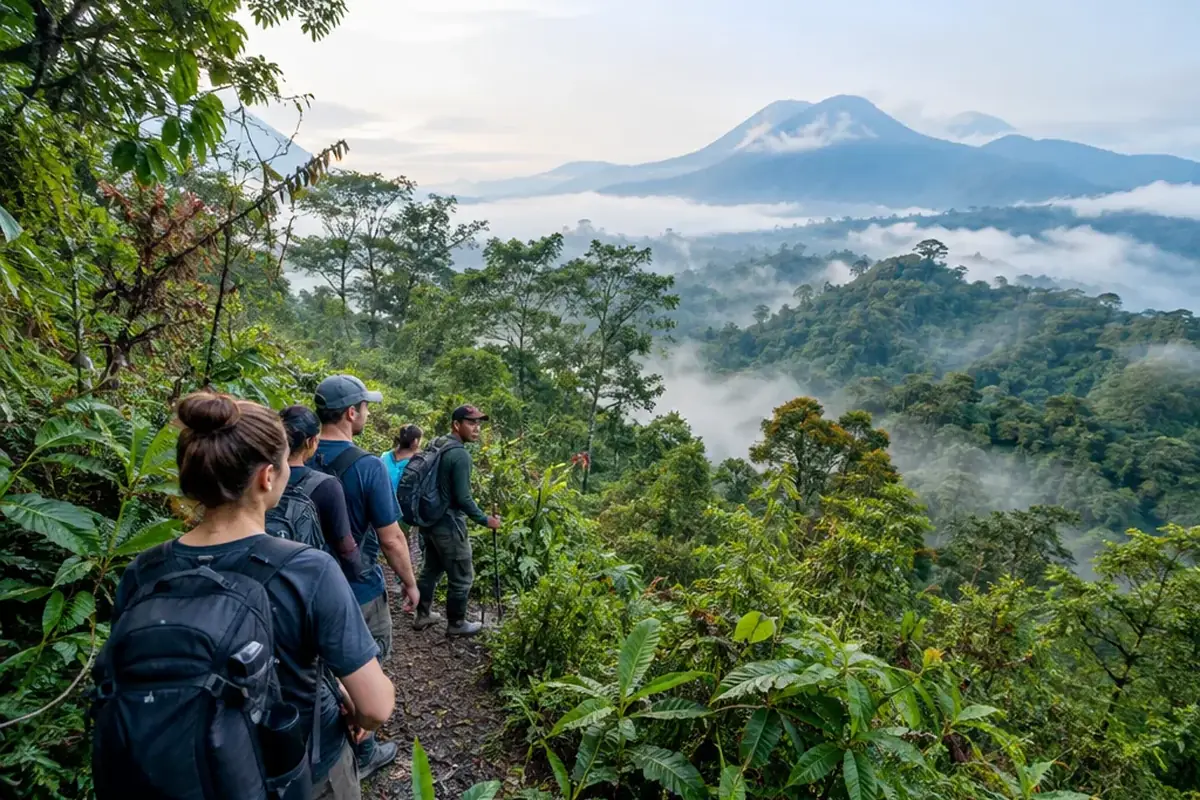
Ecotourism is responsible travel to natural areas that conserves the environment, sustains the well-being of local people, and involves interpretation and education. That is the current definition from The International Ecotourism Society (TIES). A trip into nature counts as ecotourism only if it does all three. Some governments take the idea far: since December 2017, Palau has required every arriving visitor to sign an environmental pledge that is stamped into their passport.
What Is Ecotourism? The Definitions Behind the Buzzword
TIES was founded in May 1990 and wrote the first formal definition: “responsible travel to natural areas that conserves the environment and improves the well-being of local people.” In 2015, it added interpretation and education, for staff as well as guests. UN Tourism (UNWTO) puts the focus on motivation. In its definition, ecotourism is a nature-based form of tourism in which the traveler’s main reason for going is to observe and appreciate nature and the traditional cultures found in natural areas. Fennell’s academic definition (1999) calls for tourism that is ethically managed to be “low-impact, non-consumptive, and locally-oriented.”
Who coined the term ecotourism?
Hector Ceballos-Lascuráin, a Mexican architect and environmentalist, is usually credited with coining the term in July 1983. At the time, he was a director at SEDUE, Mexico’s environmental agency. He expected ecotourists to “eventually acquire a consciousness and knowledge of the natural environment” and become “keenly involved in conservation issues.” The Oxford English Dictionary, however, records “ecotour” in 1973 and “ecotourism” in 1982, both earlier than his use. The idea itself is older still. In the 19th century, the Grand Tour shifted from city education toward nature, and some travelers wrote essays about protecting the environment. In 2002, the United Nations officially recognized ecotourism as a key part of responsible travel.
The 8 Principles of Ecotourism
TIES sets out eight core principles. Its definition of authentic ecotourism rests on two ideas: tourists use resources in a non-consumptive, non-extractive way, and environmental and social impacts are kept to a minimum.
- Minimize negative impacts.
- Build environmental awareness and respect.
- Create positive experiences for both visitors and hosts.
- Generate direct financial benefits for conservation.
- Generate financial benefits for local people and private industry.
- Deliver memorable interpretive experiences.
- Build low-emission facilities.
- Recognize the rights of Indigenous peoples.
How Ecotourism Differs From Sustainable Tourism and Other Terms
People often use these terms interchangeably, but they mean different things:
| Term | What it describes | Key difference |
|---|---|---|
| Sustainable tourism | A standard that applies to all tourism, including city hotels and cruises | Ecotourism is a niche within it, limited to natural areas |
| Nature tourism | Only where the trip happens | Says nothing about quality; unmanaged nature tourism can damage habitats |
| Responsible travel | How an individual traveler behaves | Not a tourism sector of its own |
| Ecotourism | Travel to natural areas with built-in duties to conservation, communities, and education | Combines the nature experience with responsibility for protecting it |
Where Ecotourism Is Practiced: Four Destinations
Costa Rica: a national certification
About a quarter of Costa Rica is protected as national parks and reserves. In 1997, its tourism institute launched the Certification for Sustainable Tourism (CST), one of the world’s first national sustainability certificates. More than 400 businesses now hold it, and CST 2.0 is a GSTC-Recognized Standard. Costa Rica receives roughly 3 million visitors a year, and more than 60% of them take part in ecotourism activities.
Galápagos: when a visitor cap falls behind
The 1968 limit of 12,000 visitors a year was one of the earliest caps on any protected area. Visitor numbers reached almost 70,000 by 2000 and nearly 225,000 by 2015. In 2022, the islands received 267,688 visitors: 54% from abroad and 46% from Ecuador.
Kenya: community conservancies
In Kenya, communities join together to form conservancies. They set land aside for wildlife and earn income from tourism leases and carbon credits. At the 56,000-acre Loisaba Conservancy, ecotourism pays for half the operating budget, including anti-poaching patrols and habitat restoration. Tourism income there also pays for school uniforms, medical care, and sustainable grazing programs.
Palau: a pledge stamped into your passport
Palau was the first country to change its immigration law for environmental protection. Children from Palau helped write the pledge, which commits visitors to acting responsibly toward the environment and local culture.
Why Ecotourism Matters: Benefits for Conservation and Local Communities
Ecotourism gives communities a way to earn a living that doesn’t depend on logging or poaching. Some examples of how that works:
- Nepal: Trekking fees in the Annapurna Conservation Area pay for protecting snow leopards from poaching and for sustainable forest management.
- Costa Rica: Earthwatch volunteers protecting nests have helped more than 26,000 sea turtle hatchlings reach the ocean.
- Indonesia: Ecotourism helps fund the Raja Ampat Marine Protected Area, which covers about 4.9 million acres.
- Jobs: Ecotourism needs park rangers, ecolodge staff, and local guides.
Travel and tourism make up about 10% of the global economy and are the biggest source of funding for the world’s 202,000 protected areas. One market estimate valued ecotourism at $235.5 billion in 2023 and expects it to reach $665.2 billion by 2030.
The Disadvantages of Ecotourism
The record is mixed. In Zimbabwe and in Nepal’s Annapurna region, more than 90% of ecotourism revenue reportedly flows abroad, and less than 5% stays in local communities. Even low-key activities have environmental costs. Nature walks can disturb wildlife and erode soil, and scientific studies consistently document wildlife disturbance, soil degradation, and changed animal behavior caused by human presence. A third risk is cultural commodification: when local culture is packaged and sold for profit, communities can lose parts of it. Growth is its own problem: Galápagos visitor numbers have risen far beyond the original cap.
Common Myths About Ecotourism
- “Any trip into nature is ecotourism.” No. Nature tourism describes the setting, not the impact. A jet-ski tour on a coral reef is nature tourism, but it isn’t ecotourism.
- “An eco label proves it.” More than 350 labels worldwide claim to certify ecotourism, and many make false or misleading claims.
- “Reusing towels shows a hotel is green.” Activist Jay Westerveld coined the word “greenwashing” in the 1980s after seeing hotels promote towel reuse as environmental protection when it mainly saved them money.
- “If a company doesn’t advertise its sustainability, it isn’t doing any.” Not necessarily. In one survey, about one in four companies said they had stopped talking about their efforts because they feared being accused of greenwashing. This is called “greenhushing.”
- “Ecotourism always helps locals.” Only if the money stays local. The leakage figures above show it doesn’t always.
How to Spot Greenwashing and Practice Ecotourism Responsibly
- Look for independent certification. The Global Sustainable Tourism Council (GSTC) doesn’t certify businesses itself. It accredits certification bodies that work to ISO/IEC 17065. Its criteria cover four areas: sustainable management, benefits to local communities, cultural heritage, and the environment. Certification is valid for three years, and the criteria are published so you can check them yourself. Other recognized labels include Green Key, Travelife, Green Globe, EarthCheck, Blue Flag, Green Fins, and Biosphere. The WWF also accepts B Corp verification.
- Look for specific claims. Words like “eco-friendly” or “green” with nothing to back them up are a warning sign. Trustworthy operators publish an action plan, science-based climate targets, and annual reports.
- Ask about their practices. Good operators work with scientists, don’t exploit animals, avoid single-use plastic, and pay fair wages.
- Watch wildlife in the wild. Avoid places that keep animals in enclosures or stage encounters with them. Watch wild animals from a distance.
- Follow the seven Leave No Trace principles. Stay on trails, pack out your trash, and never feed wildlife.
- Skip high-impact activities. Jet skis, helicopter tours, and off-road vehicles cause noise, pollution, and erosion.
- Spend locally. Choose locally owned businesses, local guides, and community projects so your money stays in the area.
Frequently Asked Questions
What is another word for ecotourism?
People often use “nature tourism,” “green tourism,” “responsible tourism,” and “sustainable tourism,” but none means exactly the same thing. Ecotourism is a niche within sustainable tourism, and unlike nature tourism, it includes duties to conservation and local communities.
Where is ecotourism practiced?
In natural areas around the world. Well-known examples include Costa Rica’s national parks, the Galápagos Islands, Kenya’s community conservancies, Nepal’s Annapurna region, Indonesia’s Raja Ampat, and Palau.
What are some examples of ecotourism activities?
Guided trekking in protected areas, watching wildlife at a respectful distance, volunteering to protect sea turtle nests, and staying at certified ecolodges.
Why is ecotourism important?
Done well, it turns protected nature into income: it pays for anti-poaching patrols, as at Loisaba, and gives communities a living that doesn’t depend on logging or poaching. Done badly, it disturbs wildlife and sends the money abroad.
Sustainable development meets the needs of the present without compromising the ability of future generations to meet their own.