
How the national councils that grew out of the 1992 Earth Summit worked, why the global network faded, and where that work continues today.
National Councils for Sustainable Development
The Ramsar Convention
Agenda 21, Chapter 18: protecting freshwater resources
Chapter 18 of Agenda 21 set out the first global programme for freshwater management. Here is what it asked for and how the water agenda looks today.
Regional sustainable development networks: Africa, Asia-Pacific, the Americas and Europe
Sustainable development work is organised by region as much as by country. An overview of the regional bodies and where their reports can be found today.
WSSD – World Summit for Sustainable Development
The World Summit for Sustainable Development (WSSD) refers to a summit that occurred in Johannesburg in the last week of August and first week of September 2002. It
Climate Change Convention
On November 28, 2011 the United Nation’s Climate Change Convention will take place in Durban, South Africa. This convention will bring together the very best minds in the
Recent applications of the Convention on Biodiversity
The Biodiversity Convention (1992) is the first law of its kind, to recognize that the conservation of biological diversity should be a common concern for all of
How To Think About The Convention to Combat Desertification
On a global scale, there is deepening confirmation that the climate is changing, and that word-wide climate change is a factor that is contributing to an increase in
Integrating economic social and environmental action and perspectives
Every society is composed of a multi factorial system that contributes to the overall status of the society per se. Among the varied systems that make up the
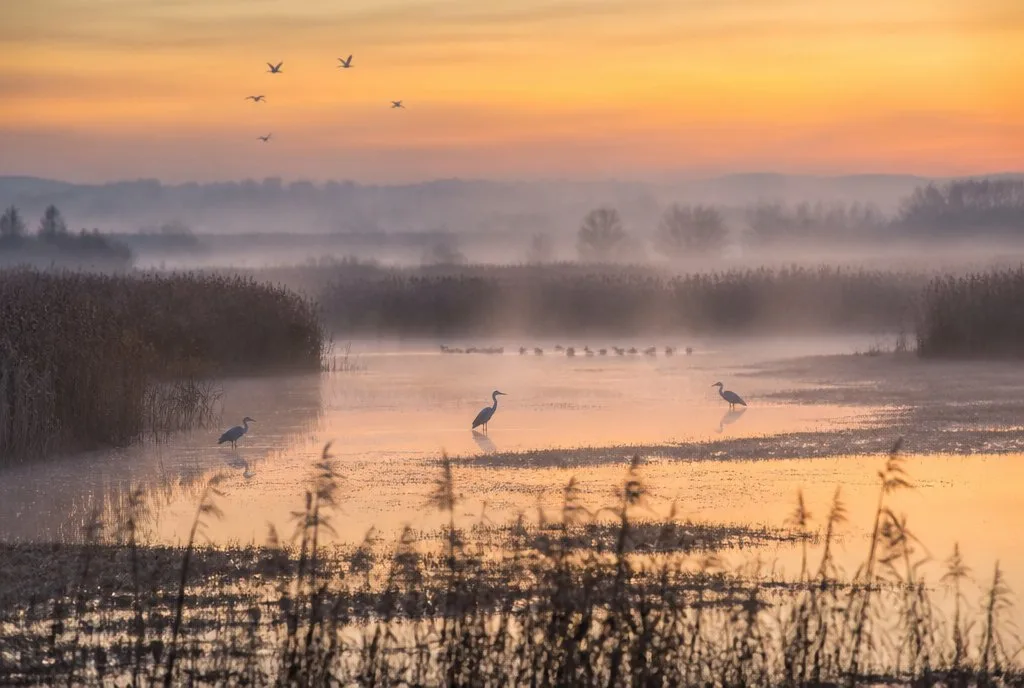
The Ramsar Convention was approved in Ramsar, Iran in 1971. The treaty involving members from all regions of the world took force in 1975. It is the only principle that addresses a specific ecosystem, wetlands. The Convention was formally adopted as The Convention on Wetlands of International Importance.
Wetlands are at risk because of the manner in which water has been used. People have failed to recognize the benefits of wetlands: water supply, food, flood protection, fiber, water purification and cultural values. Climate change has a large impact on a plethora of wetlands. The building of dams causes the course and ecology of rivers to adversely change. The biodiversity of lakes is endangered by man’s pollution, development, and increased tourist activities. Bogs are jeopardized by industry and conversion to agriculture.
At the heart of Ramsar is the “wise use” model, which is to maintain the ecological character of the wetlands. This is accomplished, for the long term benefit of mankind, by preservation and maintainable use of wetlands and their resources. The treaty also addresses not just isolated wetlands, but the protection of complete river-basins.
3.5 million acres of wetlands were earmarked as Wetlands of Important by August 2006. In addition, many countries have developed National Wetland Policies. Ramsar continues its original work which included the importance of waterfowls to the wetland environments. The birds have strong public appeal and are an enormous ecological gauge for the planets future livelihood. Convention activities are also honed on the future; disaster easement, climate change, development of long-term fisheries, increased economic inducements and support of native cultures.
Water is critical to mankind. Without healthy wetlands, including sustainable biodiversity, the entire world will fall ill. This was recognized in 1971 when countries around the world agreed to the Convention on Wetlands of International Importance. Since that time the Ramsar Convention has worked tirelessly to maintain and improve the waterways of our planet.
Sustainable development meets the needs of the present without compromising the ability of future generations to meet their own.