
How the national councils that grew out of the 1992 Earth Summit worked, why the global network faded, and where that work continues today.
National Councils for Sustainable Development
Recent applications of the Convention on Biodiversity
Agenda 21, Chapter 18: protecting freshwater resources
Chapter 18 of Agenda 21 set out the first global programme for freshwater management. Here is what it asked for and how the water agenda looks today.
Regional sustainable development networks: Africa, Asia-Pacific, the Americas and Europe
Sustainable development work is organised by region as much as by country. An overview of the regional bodies and where their reports can be found today.
WSSD – World Summit for Sustainable Development
The World Summit for Sustainable Development (WSSD) refers to a summit that occurred in Johannesburg in the last week of August and first week of September 2002. It
The Ramsar Convention
The Ramsar Convention was approved in Ramsar, Iran in 1971. The treaty involving members from all regions of the world took force in 1975. It is the only
Climate Change Convention
On November 28, 2011 the United Nation’s Climate Change Convention will take place in Durban, South Africa. This convention will bring together the very best minds in the
How To Think About The Convention to Combat Desertification
On a global scale, there is deepening confirmation that the climate is changing, and that word-wide climate change is a factor that is contributing to an increase in
Integrating economic social and environmental action and perspectives
Every society is composed of a multi factorial system that contributes to the overall status of the society per se. Among the varied systems that make up the
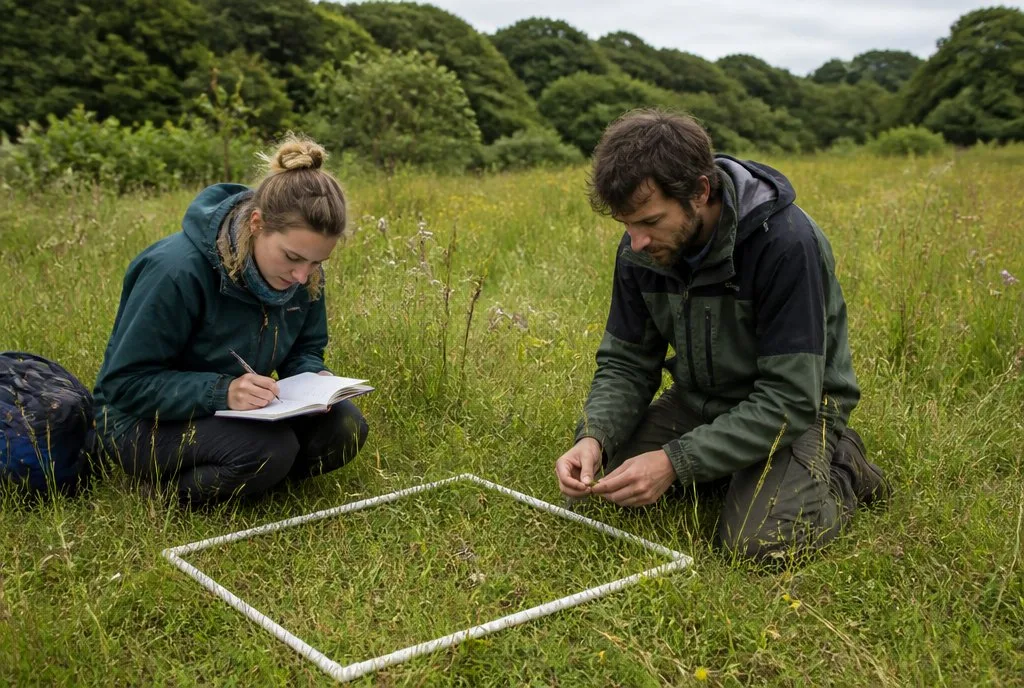
The Biodiversity Convention (1992) is the first law of its kind, to recognize that the conservation of biological diversity should be a common concern for all of humanity and is a fundamental component of the development process. The Convention was designed to remind legislatures and corporations that natural resources are finite and projects a philosophy of sustainable use. The Convention covers all ecosystems, species and genetic resources as well as pairing together conservation efforts with economic ideals while using ensuring the responsible use of biological resources. The more recent Convention on Biological Diversity of 2010 would place restrictions and bans on some forms of geoengineering.
Some of the issues addressed by the Convention and recent applications:
- The measurement and incentives provided for the conservation and sustainable use of biological diversity.
A 2011 study explores the sustainability of pikeperch, taking into account the survival rates between wild and stocked fish. Study found that stocked fish did not increase or improve yields and recommends an increase in minimum size limit in order to improve both the ecological and evolutionary sustainability of fisheries.Reference: Vainikka, Anssi, & Hyvärinen, Pekka. 2011. Ecologically and evolutionarily sustainable fishing of the pikeperch Sander lucioperca: Lake Oulujärvi as an example. Fisheries Research 113(1):8-20.
- Restricted access to genetic resources and traditional knowledge.
Andre Crump, President and founder of the “DNA Copyright Institute” seeks to assist both celebrities and average citizens obtain legal rights over their DNA profiles. For a small fee, a person can own the DNA “copyrights” top their own genetic code. Previous laws concerning gene patents have only been awarded to isolated sequences with known functions and synthetic. A provision of these patents stipulates that the patents cannot be used on naturally occurring genes in both humans or other organisms. - Impact assessment.Global warming has been a hot-button topic for many years. In 2011, a group of researchers explored the long term effects of global warming on receding glaciers by monitoring the growth and development of the newly formed streams with older streams. This study examined the theoretical similarities in macroinvertebrate community and the biological trait compositions of both streams in similar stages of development. This study found that the most abundant taxa was similar and that the functional diversity of the two streams was nearly identical. The similarities in communities raise concerns across the watershed regarding the conservation of biodiversity in freshwater habitats.
Reference: Milner, Alexander M., Anne L. Robertson, Lee E. Brown, Svein Harald Sønderland, Michael McDermott, and Amanda J. Veal. 2011. Evolution of a stream ecosystem in recently deglaciated terrain. Ecology 92:1924–1935.
Sustainable development meets the needs of the present without compromising the ability of future generations to meet their own.