
What is ecotourism? Learn its 8 core principles, real examples from Costa Rica to Palau, its downsides, and how to spot greenwashing before you book.
National Councils for Sustainable Development
The Tragedy of the Commons: Meaning, Examples and Solutions
Solarpunk: The Hopeful Vision of a Sustainable Future
What is solarpunk? Origins, core ideas, architecture, solarpunk vs. cyberpunk, real-world projects, criticisms, and how you can help build it.
The Phosphorus Cycle: Steps, Human Impact and Why It Matters
Learn how the phosphorus cycle moves through rocks, soil, water, and life—and how fertilizer runoff can disrupt ecosystems.
Anthropogenic: Meaning, Examples and Effects on the Planet
Learn what anthropogenic means, how human activities affect climate and wetlands, and why the term matters for understanding planetary change.
Agenda 21, Chapter 18: protecting freshwater resources
Chapter 18 of Agenda 21 set out the first global programme for freshwater management. Here is what it asked for and how the water agenda looks today.
Regional sustainable development networks: Africa, Asia-Pacific, the Americas and Europe
Sustainable development work is organised by region as much as by country. An overview of the regional bodies and where their reports can be found today.
National Councils for Sustainable Development: what they were and what replaced them
How the national councils that grew out of the 1992 Earth Summit worked, why the global network faded, and where that work continues today.
WSSD – World Summit for Sustainable Development
The World Summit for Sustainable Development (WSSD) refers to a summit that occurred in Johannesburg in the last week of August and first week of September 2002. It
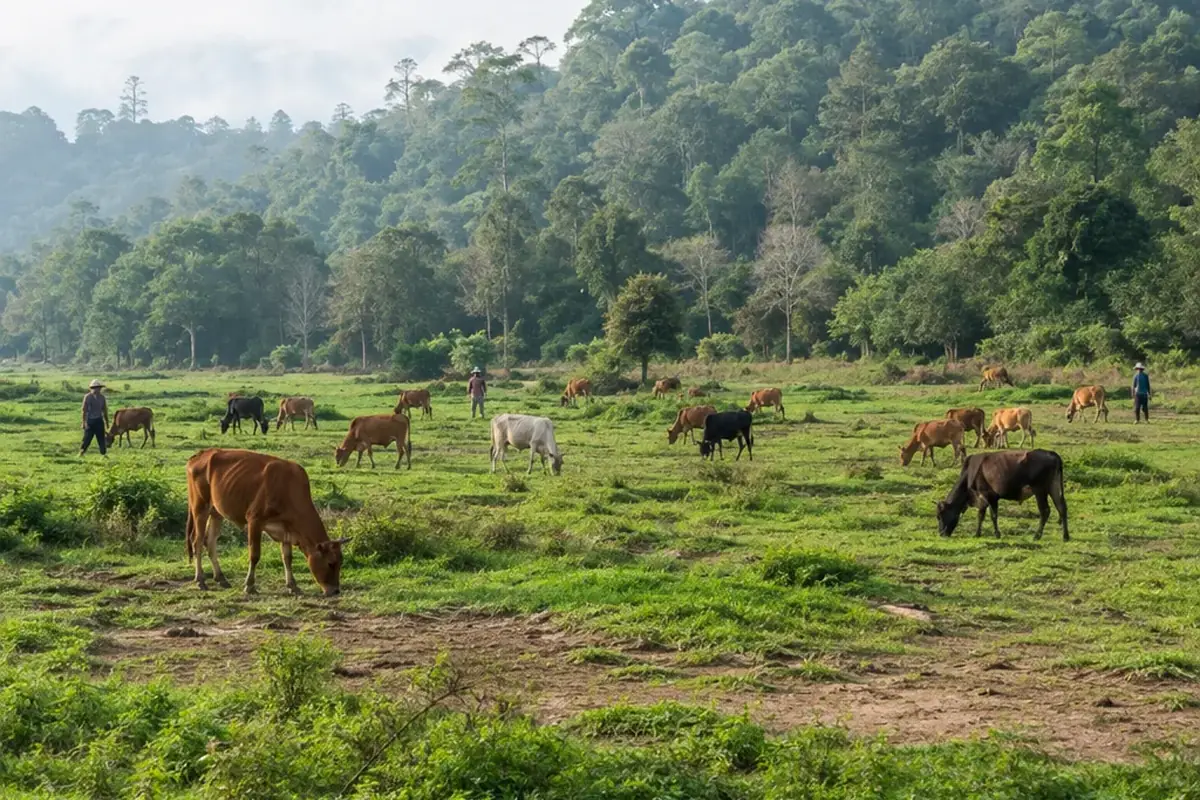
The tragedy of the commons is what happens when everyone with access to a shared resource acts in their own short-term interest, and together they use it up for everyone. In 1968, fleets took 810,000 tons of cod from the Grand Banks off Newfoundland. By 1992, the stock had fallen to 1% of its historical level, and Canada closed the fishery. The idea has a hopeful second half, too: Nobel Prize-winning research shows how communities avoid the trap.
What Is the Tragedy of the Commons?
The tragedy of the commons is a social dilemma, a situation where short-term self-interest works against the long-term common good. The classic version involves a pasture open to every herder. Each herder keeps all the profit from grazing one more animal. The cost of overgrazing, a worn-out pasture, is split among everyone. So every herder has a reason to add cattle, even though the group as a whole loses. The British economist William Forster Lloyd described exactly this choice in 1833. His herdsman asks: why should I limit my cattle if my neighbor doesn’t limit his?
In environmental science, the term covers the overuse of any common pool resource that people can draw from but nobody fully controls, such as fisheries, groundwater, forests and the atmosphere. Biologists use it too. “Evolutionary suicide,” where a trait that helps individuals ends up driving the whole species extinct, is an extreme form of it.
Who Wrote the Tragedy of the Commons?
The idea comes from Lloyd (1794–1852), a mathematics lecturer at Christ Church, Oxford. He described it in Two Lectures on the Checks to Population. The name comes from Garrett Hardin (1915–2003), an ecologist at the University of California, Santa Barbara. Lloyd never used the phrase.
Hardin first gave the argument as a lecture at Utah State University in Logan on June 25, 1968. Science published it on December 13, 1968 (volume 162, pages 1243–1248). It is one of the most-cited papers the journal has ever published, with more than 18,000 citations in Crossref. Its best-known line is “Freedom in a commons brings ruin to all.” Before 1968, papers about “the commons” or “common pool resources” were rare. After Hardin, the field took off.
Real-World Examples of the Tragedy of the Commons
| Shared resource | What happened | Key figures |
|---|---|---|
| Grand Banks cod, Canada | Industrial bottom trawling roughly tripled catches, then the stock collapsed | Stock fell to 1% of historical levels by 1992; more than 35,000 fishers and plant workers in over 400 coastal communities lost their jobs |
| Pacific bluefin tuna | Overfishing | Fell to 2–3% of its unfished level; it later rebounded under international catch quotas |
| Global fish stocks | Widespread overfishing | About 34% are overfished, and 60% are fished at the maximum sustainable limit |
| Ogallala Aquifer, Great Plains | Pumping far faster than the aquifer refills | Water levels have dropped more than 150 feet in parts of Texas and Kansas |
| Atmosphere | Used as a shared dump for greenhouse gases | CO2 reached a record 422.7 ppm in 2024; total emissions were about 53.2 billion tons of CO2 equivalent |
| City roads | Traffic congestion | Air pollution from traffic jams contributes to more than 2,200 early deaths a year in the US |
How the Tragedy Affects Natural Resources and Forests
When a resource is used up faster than it can recover, a renewable resource starts to act like a finite one. The Ogallala Aquifer is a good example. It supplies 46% of the irrigated cropland in the US Great Plains and drinking water for 82% of the people who live above it. In many places it refills by less than 0.5–1 inch a year, while farms pump out many times that amount.
The atmosphere is shared very unevenly. The average American’s carbon footprint is 17.3 tons of CO2 equivalent, compared with a global average of 6.6 tons. Every country and company has a reason to emit more, while the costs fall on everyone.
Forests show that the outcome depends on the rules. “Open-access” forests, where nobody controls who can enter or cut, are often cleared. Forests run by a community with clear rules can stay healthy. Since the 1990s, Nepal’s Community Forestry Programme has let local groups manage forests together, and deforestation there has been much lower than in state-run or open-access forests. Common woodlands in England were used sustainably for centuries because manorial courts closely regulated how they were used.
Elinor Ostrom and Governing the Commons
Elinor Ostrom (1933–2012), a political scientist at Indiana University Bloomington, challenged Hardin’s pessimism using evidence. In 2009 she became the first woman to win the Nobel Prize in Economics, which she shared with Oliver E. Williamson, for her analysis of economic governance, especially of the commons. Her 1990 book Governing the Commons: The Evolution of Institutions for Collective Action drew on more than 800 case studies. She showed that local communities can manage a shared resource sustainably using rules they write themselves. From those cases she identified eight design principles:
- Clear boundaries: Who may use the resource is clearly defined.
- Rules that fit local conditions: No one-size-fits-all approach.
- Shared decision-making: People who help make the rules are more likely to follow them.
- Monitoring: Someone checks compliance, ideally the community itself.
- Graduated sanctions: Penalties start with warnings and fines rather than expulsion.
- Conflict resolution: Disputes can be settled cheaply and locally.
- Recognition from authorities: Outside governments respect the community’s right to organize itself.
- Nested governance: For large resources, local, regional and higher-level bodies work together.
Her approach works best for resources with clear boundaries, such as local fishing grounds, irrigation systems and grazing land.
How to Prevent the Tragedy of the Commons
There is no single fix. Three main approaches come first, followed by market tools and ways to use less:
- Privatization: Giving people property rights means owners benefit from the resource’s future value, so they have a reason to protect it.
- Government regulation: Governments set and enforce limits, such as catch quotas, emission caps or limits on how much water can be pumped.
- Community management: Users create their own rules, monitoring and sanctions, following Ostrom’s model. On English commons, an overgrazed pasture was “stinted,” meaning the number of animals each member could graze was capped.
- Individual transferable quotas (ITQs): Fishers hold shares of the catch that they can trade, so each holder has a financial stake in a healthy fish population. New Zealand and Iceland use ITQs, and the Alaska halibut fishery is one of the most successful examples.
- Cap and trade and carbon pricing: A cap limits total emissions and allows permits to be traded, as in the EU Emissions Trading System. A price per ton of CO2 makes the cost of pollution visible.
- Using less: Repairing, reselling, recycling and buying less all reduce pressure on shared resources.
Common Myths About the Tragedy of the Commons
Myth 1: Shared resources are always doomed. Ostrom’s cases show they are not. England still has more than 8,000 registered common lands, and many are still managed under traditional rules. Law professor Christopher Rodgers of Newcastle University has argued that Hardin’s thesis does not apply to common land in England and Wales because it rests on a false premise.
Myth 2: Shared ownership causes overuse. The real cause is usually open access, where anyone can take as much as they want with no limits. Hardin blurred the difference between open access and a commons governed by its users.
Myth 3: Privatization is the only answer. Regulation, quotas and community rules have all worked. Critics such as Derrick Jensen call Hardin’s story propaganda for turning public property into private property.
Myth 4: Hardin’s essay was about protecting nature. His main concern was population control, and he argued that the right to have children should be restricted. Hardin held eugenicist and racist views and rejected the Universal Declaration of Human Rights. He later promoted “lifeboat ethics,” which compared wealthy nations to full lifeboats in order to justify strict limits on immigration.
Frequently Asked Questions
What was Elinor Ostrom’s theory of the commons?
Ostrom showed that communities can manage shared resources sustainably without either privatization or top-down control, provided they follow principles such as clear boundaries, monitoring and graduated sanctions.
How can the tragedy of the commons be prevented?
The main approaches are property rights, government limits such as quotas, and community self-management. Market tools such as tradable fishing quotas and cap-and-trade put a limit on total use and let users trade shares within it.
What does tragedy of the commons mean in environmental science?
It describes the overuse of resources that many people can draw from but no one fully controls, such as fish stocks, aquifers, forests and the atmosphere, where individual gains create costs everyone shares.
Sustainable development meets the needs of the present without compromising the ability of future generations to meet their own.